Few homeowners expect a driveway to involve planning rules, yet it is one of the most common places people get caught out. The paving itself is rarely the problem. The trouble usually comes from the surface you choose, the access onto the road, or the type of property you live in.
At JPD Landscaping & Building Services, we have installed driveways across South East London for over 15 years, and the permission question comes up on almost every project. This guide is a full checklist of the situations that can trigger permission, written in plain English, so you know what to check before any work starts.
A quick note first. This is general guidance based on our experience, not legal advice, and rules can differ between areas and change over time. Always confirm your own situation with your local council.
Do You Need Planning Permission?
Many driveways do not need planning permission, but several common situations do. The three that come up most are using a surface that does not let water drain away over a large front garden area, creating a new vehicle access across the pavement, and living in a conservation area or a listed building.
| Situation | Permission Likely Needed? |
| Paving a front garden with a surface that lets water drain through | Usually not |
| Paving a large front garden area with a non-permeable surface and no drainage to a lawn or border | Often yes |
| Creating or widening a vehicle access across a pavement or verge | Separate council approval, often yes |
| Property in a conservation area, or a listed building | Check first, extra rules may apply |
| Flats and maisonettes | Often yes, as normal rights may not apply |
Why These Rules Exist
It helps to understand the reasoning, because it makes the rules far easier to follow. For many years, homeowners across the country replaced front lawns with solid, sealed paving. Each driveway looked harmless on its own, but together they sent large volumes of rainwater straight into the drains during heavy storms, which added to the risk of flooding.
The surface water rule was introduced to deal with exactly that problem. It is not about how your driveway looks. It is about where the rain goes once it lands. Keeping that in mind makes it much easier to judge whether your own plans are likely to cause an issue.
The Front Garden Surface Rule
The rule that catches most people out relates to the surface itself. In England, paving over a front garden is generally allowed without planning permission, provided the surface is permeable, meaning water can drain through it.
If you use a surface that does not let water through, and the area is larger than 5 square metres, you will usually need planning permission. The exception is where the rainwater runs off to a lawn, a border or another permeable area within your property.
This rule exists to reduce the amount of surface water flowing into the drains, which helps limit flooding. It is also the reason that the surface you choose and the way you drain it matter just as much as how the driveway looks.
What Counts as Permeable?
A surface is treated as permeable if water can pass through it, or if it is drained to a permeable area. Common examples include:
- Gravel: permeable by nature, though it needs a stable base and edging.
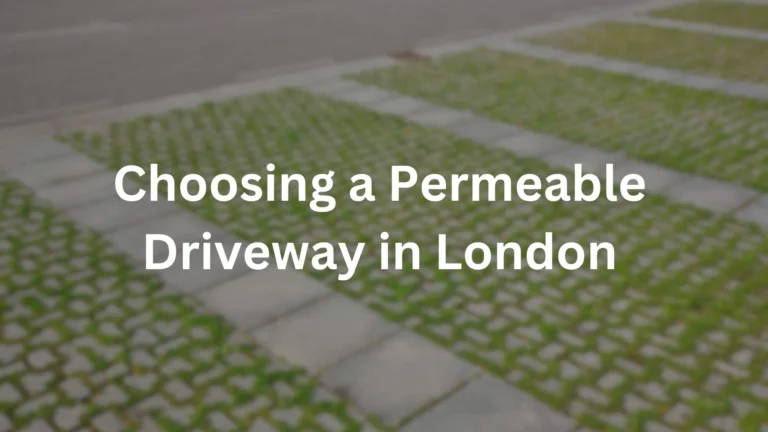
- Permeable block paving: designed with gaps and a base that let water drain through.
- Resin bound surfaces: generally permeable when laid on a base that also lets water through.
- Standard paving with drainage: acceptable where water runs to a lawn, border or soakaway within the property.
The key point is that the whole system needs to work, not just the top surface. A permeable surface laid on an impermeable base may not meet the rule in practice. If you are still deciding between surfaces, our comparison of resin bound and block paving driveways explains how each one handles water.
Designing Drainage That Actually Works
Where standard paving is used, the drainage design is what keeps the project within the rules, so it deserves proper attention. The paving needs a gentle fall that carries water towards a lawn, border or soakaway, rather than towards the house or the pavement. The receiving area also has to cope with the volume of water it will receive, which depends on the size of the drive and the type of ground.
Heavy clay soil drains slowly, so a soakaway or border in clay ground may need to be larger, or supported by a different drainage route. Our guide on patio drainage problems and fixes explains how falls and outlets behave in practice, and the same principles apply to a driveway. Getting this right at the design stage is far easier than correcting a puddle problem once the surface is down.
Dropped Kerbs and Vehicle Access
A dropped kerb is a separate matter from the paving. If your driveway needs a vehicle to cross a pavement or grass verge, the council has to approve it, and the kerb must be built by an approved contractor. This approval is separate from any planning permission for the driveway surface, and it is one of the most common causes of delay.
There is a further rule for busier roads. If your driveway will give a new or wider vehicle access onto a classified road, which includes A, B and C roads, you will generally need planning permission for the access itself.
The process, timescales and fees vary from one council to another. We recommend contacting your council early, particularly if you are creating a driveway where none exists, because the kerb approval can take longer than the building work itself.
Conservation Areas, Listed Buildings and Article 4 Directions
Some properties have extra restrictions that remove the usual freedoms. These are easy to overlook, because a driveway can look like a simple, low key project.
- Conservation areas: councils may restrict changes to front gardens and boundaries to protect the look of the area.
- Listed buildings: work in the grounds may need listed building consent, in addition to any planning permission.
- Article 4 directions: some councils remove normal permitted development rights in specific areas, so even small changes can need permission.
If your home is in an older part of South East London, it is well worth checking whether any of these apply before you commit to a design. Finding out halfway through a project is far more stressful and expensive than checking at the start. Our guide on planning permission for patios covers conservation area checks in more detail, and the same approach works for driveways.
Gates, Walls and Boundaries
A driveway often comes with new gates, pillars or boundary walls, and these have their own rules. As a general guide, a gate, fence or wall next to a road used by vehicles usually needs planning permission if it is more than one metre high, and elsewhere the limit is generally two metres. These limits can be lower or stricter in conservation areas and for listed buildings.
If you are planning gates or a new front boundary alongside the driveway, it is worth checking these heights at the same time. Our guide to how high a garden fence can be in the UK explains the general height limits in more detail.
Flats, Maisonettes and Leasehold Properties
The normal rights that let houses pave their front gardens often do not apply to flats and maisonettes. If you live in one, you will usually need to apply for planning permission, and you may also need the freeholder’s consent.
Leasehold houses can have restrictions too. Your lease or title deeds may limit what you can do to the front of the property, regardless of planning rules. It is always worth checking these documents, because planning permission does not override a covenant or lease term.
Rules in Scotland, Wales and Northern Ireland
The 5 square metre guidance above applies to England. Scotland, Wales and Northern Ireland have their own planning systems, and the details can differ. If you are outside England, check the rules for your area with your local council rather than relying on England specific guidance.
How to Check With Your Council
Contacting the council sounds daunting, but it is usually straightforward. Most councils have a planning section on their website where you can read the local guidance and find contact details. For anything unclear, a short enquiry describing the size of the drive, the surface and the drainage plan will often get you a clear steer.
If you want certainty, you can apply for a lawful development certificate, which confirms in writing that your proposed driveway is lawful without needing full planning permission. This costs a fee, but it gives you a document to show future buyers, which can be valuable when you sell. For the dropped kerb, you will need to follow the council’s separate application process, so it is worth asking about that at the same time.
How to Keep a Driveway Within the Rules
For most homes, the simplest route is to design the driveway so that it avoids needing permission in the first place. There are two main ways to do that, and the right one depends on your property, so we choose case by case after a site visit.
Option 1: A Permeable Surface
Permeable block paving, or resin bound laid on a permeable base, lets water drain straight through. This keeps the whole driveway within the permeable rule, and it often means no planning application is needed for the surface.
Option 2: Standard Paving with Drainage
Standard, non-permeable paving can still comply if the water is directed to a lawn, border or soakaway within the property. This gives you the widest choice of paving, but the drainage has to be designed properly, with the right falls and a suitable place for the water to go.
Neither approach is automatically better. Permeable surfaces simplify compliance, while standard paving with drainage gives more design freedom. A site visit lets us check the ground, the falls and the available space before recommending one.
Looking After a Permeable Driveway
A permeable driveway only stays compliant if it keeps working, so a little upkeep matters. Over time, silt, leaves and moss can clog the joints or the surface, which slows the flow of water. Sweep regularly, and wash the surface gently once or twice a year to keep the pores clear.
Take care with a pressure washer. Held too close, or used at too high a setting, it can strip the jointing material and damage the surface. Our guide on how to clean patio slabs explains the right pressure and technique, and the same advice applies here.
A Checklist to Work Through Before You Start
Run through these questions before you commit to a design or book any work.
- Is your property a house, or a flat or maisonette?
- Is it in a conservation area, or is it a listed building?
- Does your council have an Article 4 direction covering your street?
- Will the driveway be larger than 5 square metres in the front garden?
- Is the surface permeable, or will the water drain to a lawn, border or soakaway?
- Do you need a new or wider dropped kerb across the pavement?
- Does the access lead onto an A, B or C road?
- Are you adding gates or boundary walls above the usual height limits?
- Do your lease or title deeds restrict changes to the front of the property?
If you answer yes to any of the later questions, it is worth contacting your council before work begins.
Common Mistakes Homeowners Make
Based on the driveways we have worked on, the same mistakes come up again and again, often together.
- Assuming no permission is needed. Many people start work without checking, and only find out about a rule when a neighbour or the council raises it.
- Treating the dropped kerb as part of the paving. The kerb is a separate approval, with its own cost, contractor and timescale. Not realising this is a frequent cause of delay.
- Using a non-permeable surface with no drainage. A large paved area with nowhere for the water to go is exactly what the rule is designed to prevent.
All three are avoidable with a short conversation at the planning stage.
What Happens If You Build Without Permission?
If a driveway needed permission and did not get it, the council can take enforcement action, which may include requiring you to remove or alter the surface. Even if that does not happen, an unapproved driveway can cause problems when you come to sell, because buyers’ solicitors often ask for evidence that work complied with the rules.
It is far cheaper to check first than to rebuild a driveway later. If you are unsure, a quick call to the council, or advice from an installer who knows the local area, can save a great deal of stress. If the driveway is part of a wider garden project, our guide on how much it costs to landscape a garden can help you budget for the checks, kerb work and groundwork together.
Project Example: A Front Garden Driveway in South East London
One of our typical projects involved a South East London homeowner who wanted to replace a worn front lawn and a small concrete pad with a driveway for two cars.
| Detail | Specification |
| Driveway size | About 25m² |
| Property | A house in a residential street |
| Original plan | Standard block paving with no drainage provision |
| Issue | Large non-permeable area with nowhere for water to drain |
| Solution | Permeable block paving on a suitable base |
The homeowner had assumed that any paving would be fine. During our site visit, we pointed out that a 25 square metre non-permeable surface with no drainage would probably need planning permission. We also noted that the property had no dropped kerb, which would need a separate council approval.
After talking through the options, the homeowner chose permeable block paving, which let water drain through the surface and kept the design within the rules. They also applied for the dropped kerb with the council, and we scheduled the paving around the approval. The finished driveway looks smart, drains well and avoided a planning application altogether. It is a good example of how a short check at the start can shape the whole project.
Frequently Asked Questions
Do I need planning permission for a driveway in the UK?
Not always. In England, paving a front garden with a permeable surface generally does not need permission, but a non-permeable surface over more than 5 square metres usually does, unless the water drains to a lawn, border or other permeable area. A new dropped kerb needs separate council approval.
What is the 5 square metre rule for driveways?
In England, if you pave more than 5 square metres of front garden with a non-permeable surface, and the water does not drain to a permeable area within your property, you will usually need planning permission. Permeable surfaces avoid this requirement.
Do I need permission for a dropped kerb?
Yes. If your driveway crosses a pavement or verge, the council has to approve a dropped kerb, and it must be built by an approved contractor. This is separate from planning permission for the driveway surface.
Do I need planning permission to pave my front garden?
If the surface is permeable, or the water drains to a lawn, border or soakaway, you often will not. If you use a non-permeable surface over a large area with no drainage, you probably will. Check with your local council to be sure.
Do conservation areas affect driveway rules?
Yes. Conservation areas and listed buildings can have additional restrictions, and some councils have Article 4 directions that remove normal permitted development rights. Always check before starting.
Do flats need planning permission for a driveway?
Often yes. Flats and maisonettes usually do not have the same permitted development rights as houses, so permission is normally needed, and you may also need the freeholder’s consent.
Can resin bound count as permeable?
Resin bound is generally permeable when it is laid on a base that also lets water through. The whole build up matters, so we check each site and advise case by case.
Do new gates or walls need permission?
They can. A gate, fence or wall next to a road used by vehicles usually needs permission above one metre in height, and the limit is generally two metres elsewhere. Conservation areas and listed buildings may have stricter limits.
Get a Free Quote for Your Driveway Project
If you are planning a new driveway, JPD Landscaping & Building Services offers free quotes across South East London. We will check your site, talk through drainage and the surface options, and point you towards the council checks you need, so there are no surprises once work begins.
Call now for a free quote and get your driveway project started on the right footing.