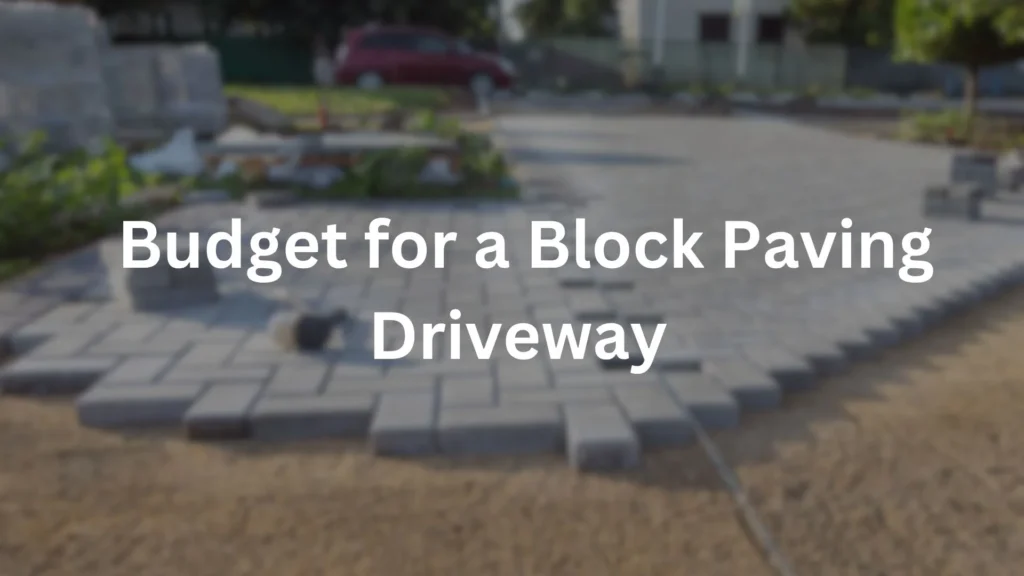
A new driveway is one of the biggest outdoor spending decisions most homeowners make, so it makes sense to understand the price before you start collecting quotes. Block paving remains one of the most popular choices in the UK, thanks to its smart appearance, its strength under vehicles, and the fact that individual blocks can be lifted and replaced if they are ever damaged.
At JPD Landscaping & Building Services, we have installed block paving driveways across South East London for over 15 years. This guide explains what a block paving driveway really costs, what pushes the price up or down, how it compares with other surfaces, and what a typical project looks like.
Average Block Paving Driveway Cost
A standard block paving driveway typically costs between £100 and £130 per square metre, including materials and labour. For most homes, that puts the total somewhere between £1,500 and £6,500, depending on the size of the drive and how much groundwork the site needs.
Driveway sizes vary widely across South East London, from compact single car drives to wide frontages that take several vehicles. The table below shows what the per square metre rate means in practice.
| Driveway Size | Approximate Area | Estimated Cost |
| Small single car | 15m² | £1,500 to £1,950 |
| Single car | 20m² | £2,000 to £2,600 |
| Two cars | 30m² | £3,000 to £3,900 |
| Wide two car | 35m² | £3,500 to £4,550 |
| Large driveway | 40m² | £4,000 to £5,200 |
| Extra large driveway | 50m² | £5,000 to £6,500 |
These figures assume reasonably straightforward ground. Excavation, drainage and access can all change the final price, and we cover each of them below.
What the Price Includes
When we quote a per square metre rate, it covers the whole job rather than just the blocks. A proper driveway is built in layers, and each layer is part of what you are paying for.
- Excavation: digging out the existing surface and soil to the required depth.
- Sub-base: a compacted foundation that carries the weight of vehicles.
- Bedding layer: a levelled layer of sharp sand that the blocks sit on.
- The blocks themselves: laid in your chosen colour and pattern.
- Edge restraint: a firm border that stops the blocks spreading over time.
- Jointing: sand brushed into the joints to lock the blocks together.
- Waste removal: taking away the spoil and any old surface.
Be wary of a quote that looks much cheaper than the rest. It often means the sub-base has been reduced, or the edge restraint left out, and those are exactly the shortcuts that cause driveways to fail.
What Pushes the Cost Up
Two driveways of the same size can cost very different amounts. Here are the factors that make the biggest difference.
Excavation and Groundwork
This is the biggest cost driver beyond the paving itself, and it is the factor most homeowners underestimate. A driveway carries far more weight than a patio, so it needs a deeper and more carefully compacted sub-base. Digging out that depth, and removing whatever is already there, takes time, machinery and waste disposal.
If you are replacing an existing surface such as old tarmac, concrete or a failed block paved drive, the cost of breaking it out and taking it away can add noticeably to the total. Sloped sites and soft ground can add further work, because the base needs extra attention to stay stable. If your front garden has a significant level change, it is worth reading about retaining wall installation, since managing the slope properly is often part of the groundwork.
Drainage and UK Rules
In the UK, rules on front garden surfaces exist to reduce surface water running into the drains. As a general guide, paving over a large area of front garden with a surface that does not let water through may need planning permission, unless the water drains to a lawn or border, or the surface is permeable.
How we handle this depends on the property, so we check the site first and decide case by case. The solution might be permeable block paving, where water drains through the joints, or standard block paving with a soakaway or drainage channel. Each carries a different cost, which is why drainage is worth discussing early. Our guide on patio drainage problems and fixes explains how water behaves on paved surfaces and why the fall and outlets matter.
Dropped Kerbs and Access
If your driveway does not already have a dropped kerb, you will need the council to approve one and have it built by an approved contractor. This is a separate cost from the paving, and it can also take time to arrange. If you are creating a new driveway, it is best to raise this at the start so it does not hold up the project.
Access matters too. If materials and machinery cannot reach the site easily, the work takes longer and costs more.
Pattern, Blocks and Edging
The look you choose also affects the price. A simple stretcher bond or basket weave is cheaper to lay than a herringbone pattern, which takes longer but is stronger under vehicles. Premium blocks, multiple colours, decorative borders and detailed edging all add to the cost, although they can make a driveway look far more distinctive. If you are weighing up border options, our guide to patio edging ideas covers setts, brick and metal edging in detail, and much of it applies to driveway borders too.
How Block Paving Compares with Other Surfaces
Block paving sits in the middle of the driveway market. It costs a little less than resin or natural stone, but more than gravel or tarmac, and it offers a combination of strength and good looks that few other surfaces match.
| Surface | Cost Compared with Block Paving | Key Point |
| Gravel | Lower | Affordable, but loose and needs topping up |
| Tarmac | Lower | Practical, but plain and hard to repair neatly |
| Block paving | Mid range | Strong, attractive and easy to repair block by block |
| Resin bound | Higher | Smooth and permeable, with a higher price |
| Natural stone | Higher | Premium look at a premium cost |
One of block paving’s real advantages is repairability. If a section is damaged or stained, you can lift the affected blocks and replace them, rather than patching or resurfacing the whole drive.
Why Block Paving Is Worth the Cost
For many homeowners, the extra cost over gravel or tarmac is justified by what block paving delivers.
- Strength: properly laid, it handles everyday vehicle loads very well.
- Appearance: a huge choice of colours, patterns and finishes adds real kerb appeal.
- Repairability: individual blocks can be replaced if they are damaged.
- Longevity: a well built block paving driveway lasts for many years with simple upkeep.
- Added value: a smart driveway makes a strong first impression of your home.
Those benefits depend on one thing, which is a properly built base. That is where most failures start.
Why Block Paving Driveways Fail
Block paving driveways rarely fail because of the blocks. They fail because of what is underneath and around them. Based on the repair work we have handled, three mistakes account for most problems, and they often appear together.
- Skimping on the sub-base. If the sub-base is too shallow, the surface sinks and ruts under the weight of vehicles, particularly where cars park or turn.
- Poor edge restraint. Without a firm border, the blocks gradually spread outward, the joints open up and the whole surface loosens.
- Poor compaction. A base that has not been compacted thoroughly settles unevenly, leaving dips and puddles in the finished drive.
All three can be hidden once the blocks are down, which is why a cheap quote can look fine on day one and fail within a few years. A properly built driveway costs more at the start, but it avoids the far higher cost of lifting and relaying it later. The same principles of compaction and bedding apply to any paved surface, which is why our guide on how to lay a patio is a useful companion read if you want to understand what good groundwork looks like.
Looking After a Block Paving Driveway
A block paving driveway needs very little upkeep, but a few simple habits make a real difference to how long it looks good. Sweep it regularly to stop dirt and leaves building up in the joints, and wash it once or twice a year with warm water and a mild detergent. Keep the joints topped up with sand, because well filled joints lock the blocks together and stop weeds taking hold.
Be careful with pressure washing. Held too close, or used at too high a setting, a pressure washer can strip the sand from the joints, leaving the blocks loose and the surface open to weeds. Our guide on how to clean patio slabs explains the right pressure, distance and angle, and the same advice applies to a block paved drive.
Oil and fuel drips are the other common issue. Wipe up spills quickly, and use a suitable cleaner on any stains, so they do not soak into the blocks and become permanent.
Project Example: A Two Car Driveway
One of our typical projects involved a South East London home with an ageing tarmac driveway that had cracked and sunk in several places. The owners wanted a smarter surface that could take two cars.
| Detail | Specification |
| Driveway size | About 28m² |
| Existing surface | Cracked tarmac, removed during excavation |
| New surface | Herringbone block paving in two tones |
| Drainage | Assessed on site and designed case by case |
| Border | Contrasting edge with a firm restraint |
The biggest part of the job was the groundwork. We broke out and removed the old tarmac, excavated to the required depth, and laid a compacted sub-base before the bedding layer and blocks went down. We laid the blocks in a herringbone pattern for strength, and finished the edge with a contrasting border held by a firm restraint, so the surface stays tight over time.
The final price reflected the groundwork involved, which was a larger share of the total than the blocks themselves. The owners now have a driveway that looks far smarter and, more importantly, one built on a base that will carry their vehicles for years. It is a good example of why groundwork, not the paving, is usually the real cost of a driveway.
How to Get an Accurate Quote
A per square metre figure is useful for early budgeting, but the only way to get a reliable price is to have someone look at your site. When you request a quote, it helps to be ready with a few details.
- The approximate size of the driveway and the number of vehicles it needs to hold.
- What is there at the moment, and whether it needs to be removed.
- Whether the site slopes, and whether there is an existing dropped kerb.
- Your preferred colours, pattern and style of edging.
- Any drainage concerns, such as water pooling after rain.
A good quote should itemise the groundwork, the sub-base, the blocks, the edging and the waste removal, so you can see exactly what you are paying for and compare quotes fairly. If the driveway is part of a bigger garden project, our guide on how much it costs to landscape a garden helps you see where it fits into the overall budget.
Frequently Asked Questions
How much does a block paving driveway cost in the UK?
A standard block paving driveway typically costs between £100 and £130 per square metre, including materials and labour. For a single car drive of about 20m², that is roughly £2,000 to £2,600, and a larger two car drive costs more.
Is block paving cheaper than resin or natural stone?
Yes, block paving generally costs a little less than resin bound or natural stone. It does cost more than gravel or tarmac, but it offers better looks, strength and the ability to repair individual blocks.
What makes a driveway more expensive?
Excavation and groundwork are the biggest cost drivers beyond the paving itself. Removing an old surface, sloped or soft ground, drainage requirements, a new dropped kerb and detailed patterns or edging can all add to the price.
Do I need planning permission for a block paving driveway?
It depends on the property. Paving a large area of front garden with a surface that does not let water through may need planning permission, unless the water drains to a lawn or border or the surface is permeable. We check the site first and advise case by case.
How long does a block paving driveway last?
A properly built block paving driveway lasts for many years. The lifespan depends far more on the quality of the sub-base, compaction and edge restraint than on the blocks themselves.
Can individual blocks be replaced?
Yes, this is one of block paving’s biggest advantages. If a block is cracked or stained, it can be lifted and replaced without disturbing the rest of the driveway.
Book a Free Consultation for Your Driveway
If you are planning a new block paving driveway, or replacing an old one, JPD Landscaping & Building Services offers free consultations across South East London. We will assess your site, explain exactly what the groundwork involves, and give you a clear, itemised price before any work begins.
Book a free consultation today to start planning your driveway.