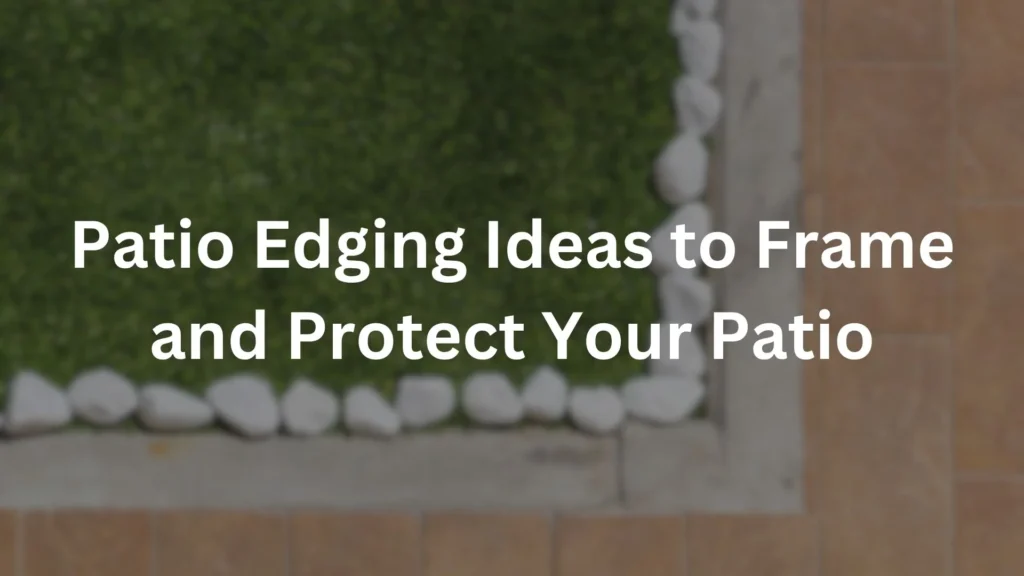
Edging is the part of a patio that most people think about last, yet it does two very important jobs. It gives your patio a clean, finished look, and it holds the whole surface in place. The right edging can make a simple patio look designed, while the wrong choice, or poor fitting, can leave you with loose slabs and gaps within a couple of years.
At JPD Landscaping & Building Services, we have installed patio edging in every style across South East London for over 15 years. This guide shares eight edging ideas that work well in real gardens, how to fit them so they last, and the mistake that causes most edging problems.
Why Patio Edging Matters
Patio edging is more than decoration. It acts as a restraint around the outside of the paved area, stopping slabs from creeping outward under foot traffic, rain and ground movement. Without a solid edge, the outer slabs gradually shift, joints open up, and the whole patio starts to loosen.
Edging also separates your patio from lawn, gravel or planting beds, which keeps soil and grass from spilling onto the paving and makes the space easier to maintain. If your patio sits next to a lawn, it is worth reading about our artificial lawn installation service too, since a crisp edge makes a big difference to how both surfaces look together. Visually, edging frames the patio in the same way a mount frames a picture.
Which Patio Edging Is Best?
There is no single best option, because the right edging depends on your garden style, your paving, and how the patio sits within the garden. We recommend choosing case by case rather than defaulting to one material for every project. The table below gives a quick overview of the main styles.
| Edging Style | Best For |
| Matching paved border | A seamless, polished finish |
| Stone setts | Traditional gardens and a durable edge |
| Brick or block paving | Classic looks and defined borders |
| Timber sleepers | Natural styles and raised areas |
| Metal edging | Modern, low profile finishes and curves |
Eight Patio Edging Ideas
1. Matching Paved Border
Using the same paving as your main patio, laid as a border, is the simplest way to get a neat, cohesive edge. Because the material matches, it blends in and keeps the design uncluttered. This works particularly well for small gardens, where too many materials can make the space feel busy.
It is also the easiest option to plan, since you are ordering one material rather than coordinating two. If you are still choosing your main paving, our guide to how to build a stone patio explains what to expect from natural stone as the base material for this kind of border.
2. Stone Setts
Stone setts are small, durable blocks that make a strong, traditional edge. They can be laid in a single row or a double row, and they pair well with both natural stone and porcelain paving. Setts also help hold the outer edge of the patio firmly in place, which is a practical benefit on top of the good looks.
A double row gives a more substantial, heritage feel, while a single row keeps things lighter and more contemporary. Either way, setts reward careful setting out, because uneven spacing is very noticeable in a small, repeated unit.
3. Brick or Block Paving Edging
Brick or block edging gives a defined, classic border and works especially well with traditional properties and period homes. It is also a good way to introduce a warmer colour around a neutral patio. Like setts, it needs to be properly bedded and backed to stay put.
Laying the bricks on their side, in a soldier course, gives a clean, formal line, while laying them end on creates a slightly chunkier border that stands out more against the main paving.
4. Timber Sleepers
Timber sleepers suit natural, informal gardens and are a popular choice where a patio meets a planted area. They are also useful for edging raised patios, where they can retain the ground level. Choose treated or hardwood sleepers for longevity, since untreated softwood will deteriorate faster in damp conditions.
If your patio sits at a different level to the rest of the garden, sleepers can double as a low retaining edge. Our sleeper retaining wall installation guide covers how to fix them securely when they are doing that heavier job.
5. Metal Edging
Steel or aluminium edging strips give the cleanest, most modern finish. They sit low, almost invisible, and create a crisp line between patio and lawn or gravel. Metal edging is also flexible enough to follow gentle curves, making it a good option for shaped patios.
Because it is so slim, metal edging works best where the paving itself is already well restrained, or where it is mainly doing the job of separating the patio from lawn rather than holding heavy slabs in place.
6. Contrasting Colour Border
A border in a contrasting shade, such as darker setts around a light patio, creates strong visual impact for relatively little extra cost. Clean straight lines with a contrasting border make a patio look deliberately designed, and the effect works in both modern and traditional gardens.
The key is to keep the contrast deliberate. One clear border colour looks designed, while several competing shades can look busy, particularly in a smaller garden.
7. Curved Edging
Curves soften the hard geometry of paving and help a patio flow into the surrounding garden. Small setts or flexible metal edging both work well for curved edges. Curves take a little more time to set out and lay, but the result can make a garden feel more natural and relaxed.
For a gentle curve, a flexible strip often does the job neatly, while tighter curves usually suit small setts, which can be laid in a smooth arc without awkward cuts.
8. Raised Edging with Planters or Seating
For a raised patio, the edge can do more than contain the paving. Building planters or seating into the raised edge adds greenery and usable space without cluttering the patio surface. This idea works well in smaller gardens, where every square metre needs to earn its place.
If the raised edge is holding back soil, it needs to be built as a proper retaining structure rather than a decorative border, which is covered in more detail on our retaining wall installation page.
How to Secure Edging So It Lasts
How you fit the edging depends on the material, and this is where good installation really matters. The aim is the same in every case: the edging needs to be firmly anchored so it can hold the paving in place rather than moving with it.
- Setts, brick and paved borders: These are normally bedded on mortar and backed with a concrete haunching, which is a shoulder of concrete behind and under the edging that locks it in position.
- Metal edging: This is held by stakes or pegs driven into well compacted ground, so it stays straight and rigid under pressure.
- Timber sleepers: These should be fixed to stakes or posts, or set into concrete where they are holding back raised ground, so they cannot lean or shift.
Whatever material you choose, the ground beneath and behind the edging should be firm and compacted. Edging fitted onto loose soil will move, however good the material is.
The Most Common Edging Mistake
The mistake we see most often is edging that pulls away or shifts because it was not properly set in concrete. It is an easy shortcut to take, since edging can look perfectly solid straight after it is laid, even when it has no real backing behind it.
Over time, the effect becomes clear. Without a firm restraint, the outer slabs creep outward, joints widen, and the edging itself leans or separates from the paving. That can leave uneven edges, trip hazards and a patio that looks tired well before its time.
- Correct approach: Edging bedded and backed with concrete haunching, or fixed firmly to stakes or posts depending on the material.
- Risky approach: Edging simply placed on loose ground or a thin layer of mortar, with nothing behind it to hold it in place.
Choosing Edging for Your Garden Style
Think about your overall garden design before choosing. A modern garden with clean lines suits metal edging or a crisp contrasting border. A traditional garden usually looks best with setts or brick. A natural, planted garden works well with timber sleepers, while a compact space often benefits from a matching paved border that keeps things simple.
Also consider how the edge meets the rest of the garden. Where a patio meets a lawn, a low profile edge helps with mowing. Where it meets planting, a slightly taller edge keeps soil and mulch from spilling onto the paving. For more help pulling the whole garden together, our guide on how to decorate an outdoor garden covers colour, planting and layout choices that work alongside your edging.
Planning and Budgeting for Edging
Edging is often treated as a small add on, but it is worth planning from the start, because it affects excavation width, drainage and the finished level of the whole patio. Allowing room for the edging and its concrete backing at the setting out stage avoids awkward changes once the paving is already down.
Costs vary by material and project size. Simple metal strips and a matching paved border tend to be more budget friendly, while hand laid setts and double rows cost more because of the extra materials and labour. If you are weighing edging as part of a wider garden project, our guide on how much it costs to landscape a garden helps you see where edging fits into the overall budget.
Looking After Patio Edging
Most edging needs very little maintenance once it has been fitted properly. Check it occasionally for any leaning, movement or gaps, particularly after a wet winter, and deal with small issues early. Keep edges clear of soil, leaves and grass so water can drain away freely and weeds cannot establish in the joints.
Timber sleepers benefit from an annual check for rot or splitting, while metal edging may need the odd stake re-driven if the ground has settled. Mortared setts and brick can be re-pointed if the joints begin to crumble, which is a quick, inexpensive repair compared with relaying a loosened border.
Project Example: Contrasting Border on a Porcelain Patio
One of our typical projects involved a South East London garden with a 20 square metre porcelain patio. The customer liked the patio itself but felt the edges looked unfinished where the paving met the lawn.
| Detail | Specification |
| Patio size | 20m² |
| Paving | Light porcelain slabs |
| Edging chosen | Darker stone setts as a contrasting border |
| Fixing method | Mortar bedding with concrete haunching |
We laid a single row of darker setts around the full edge of the patio, bedded on mortar and backed with a concrete haunching so the border would stay firmly in place. The contrast with the lighter porcelain gave the patio a crisp, framed look, and the setts also acted as a solid restraint for the outer slabs.
The finished patio looks far more considered than before, and the edging has remained straight and stable since installation. It is a good example of how a simple contrasting border can lift a patio without adding much to the overall cost.
Frequently Asked Questions
What is the best edging for a patio?
There is no single best option. Stone setts, brick, timber sleepers and metal edging all work well, and the right choice depends on your garden style, your paving and how the patio meets the rest of the garden.
Do patio slabs need edging?
Yes, in most cases. Edging acts as a restraint that stops the outer slabs creeping outward and keeps the surface stable. It also gives the patio a neat, finished edge and separates it from lawn or planting.
How do you stop patio edging from moving?
Fit it firmly into a compacted base. Setts, brick and paved borders are normally bedded on mortar and backed with concrete haunching, while metal edging is held with stakes and timber is fixed to posts or stakes.
What is the cheapest patio edging option?
Costs vary by material and project size, but simple metal edging strips and a matching paved border are often more budget friendly than full stone setts. A consultation can give you a clear price for your specific garden.
Can you use metal edging on a curved patio?
Yes. Steel and aluminium edging strips are flexible enough to follow gentle curves, which makes them a popular choice for shaped patios and borders.
Can I add edging to an existing patio?
Often, yes. Edging can usually be added around an existing patio, although the ground at the edge may need to be dug out and backed with concrete so the new border is properly restrained.
Book a Free Consultation for Your Patio Edging
If you are planning a new patio, or want to finish an existing one with proper edging, JPD Landscaping & Building Services offers free consultations across South East London to help you choose the right style for your garden.Book a free consultation today to start planning your patio project.