If you’re planning a patio for your garden, cost is usually the first thing you want a clear answer on before anything else. The truth is, patio pricing varies a fair amount depending on the material you choose, the size of the space, and whether your garden needs any drainage work alongside the paving itself.
At JPD Landscaping & Building Services, we’ve installed patios across South East London for over 15 years, working extensively with natural stone as well as concrete and porcelain paving. This guide breaks down real pricing, explains what tends to push costs above a standard estimate, and includes a real project example so you know what to expect before getting a quote.
Average Patio Cost
Natural stone, such as Indian sandstone or limestone, typically costs between £90 and £120 per square metre, including materials and labour. Concrete or porcelain paving slabs tend to be a bit more budget friendly, usually running £60 to £80 per square metre. For a medium sized garden patio of 15 to 25 square metres, that works out to roughly £1,350 to £3,000 for natural stone, and £900 to £2,000 for concrete or porcelain paving.
| Patio Material | Cost Per m² (Materials + Labour) | Typical Total (15 to 25m² garden) |
| Natural stone (sandstone, limestone) | £90 to £120 | £1,350 to £3,000 |
| Concrete or porcelain paving | £60 to £80 | £900 to £2,000 |
These figures are all in estimates that assume relatively straightforward ground conditions. Drainage requirements, covered below, are the factor most likely to push your final cost above these ranges.
Natural Stone vs Concrete/Porcelain: Cost and Style Differences
Natural Stone Patios
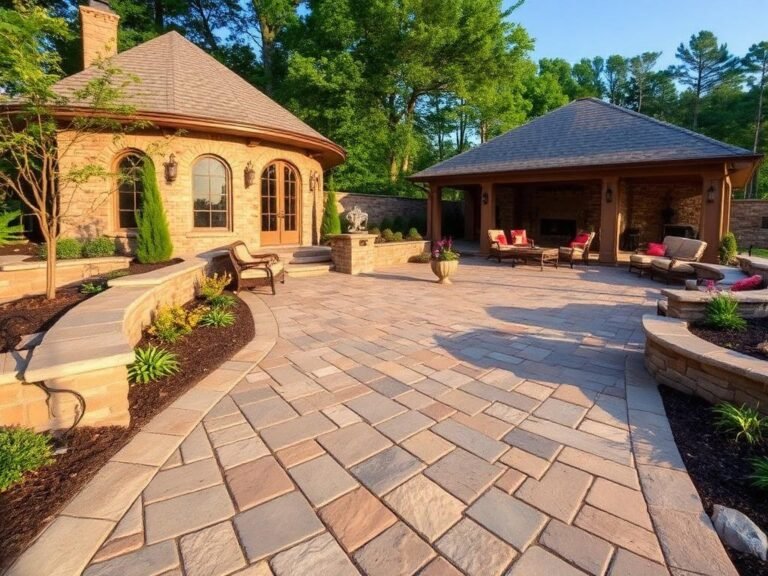
Natural stone, such as Indian sandstone or limestone, is what we install most often, and it typically costs £90 to £120 per square metre. Beyond the higher upfront cost compared with manufactured paving, natural stone offers a genuinely distinctive, premium look, with natural variation in colour and texture that manufactured slabs simply can’t replicate. It also tends to age well, developing character over time rather than looking dated.
Concrete and Porcelain Paving
Concrete and porcelain paving slabs typically cost £60 to £80 per square metre, making them a more budget friendly option for homeowners wanting a clean, consistent look without the premium price tag of natural stone. Porcelain in particular has become popular for its durability and low maintenance surface, while still offering a wide range of styles and finishes.
| Factor | Natural Stone | Concrete or Porcelain |
| Cost per m² | £90 to £120 | £60 to £80 |
| Appearance | Natural variation, premium feel | Consistent, uniform finish |
| Maintenance | Occasional sealing recommended | Generally low maintenance |
| Best for | Homeowners wanting a distinctive, premium look | Budget conscious projects wanting a clean finish |
A Closer Look at Natural Stone Options
Within natural stone itself, Indian sandstone and limestone are the two materials we’re asked about most often, and each brings a slightly different look and feel to a finished patio. Indian sandstone offers warm, earthy tones with visible natural texture and colour variation across each slab, making it a popular choice for a traditional or rustic garden aesthetic. Limestone tends to have a smoother, more refined surface with subtler colour variation, often suiting a more contemporary garden design where a cleaner, more uniform stone appearance is preferred while still retaining the natural material’s premium feel.
Both are comparable in price within the £90 to £120 per square metre range, so the choice between them usually comes down to which finish and tone best suits your garden’s overall style rather than any significant cost difference.
Porcelain vs Concrete: Which Should You Choose?
Since both fall within the same general price bracket, it’s worth understanding the practical differences between porcelain and concrete paving specifically. Porcelain is manufactured under high heat and pressure, giving it excellent resistance to staining, frost damage, and fading, along with a very consistent, low maintenance surface that rarely needs sealing or specific ongoing treatment.
Concrete paving is generally slightly more affordable within its price bracket and offers a wide range of textures and finishes, including options designed to mimic natural stone at a lower cost, though it can be somewhat more porous than porcelain and may benefit from occasional sealing to maintain its appearance over the years.
For budget conscious projects wanting a genuinely low maintenance surface, porcelain often represents the stronger long term value within the concrete and porcelain price bracket, while standard concrete paving remains a perfectly solid choice for a more modest budget.
What Pushes Patio Cost Above the Standard Estimate?
Beyond material choice, a few factors can genuinely add to your final patio cost, and drainage installation tends to be the most significant of these.
- Drainage installation. Channel drains, soakaways, or other drainage solutions are often necessary to properly manage rainwater runoff from a patio surface, particularly on larger areas or gardens with limited natural drainage. This is the factor we see add the most to a project beyond the base per square metre rate.
- Ground preparation and levelling. As with most outdoor groundwork, uneven or poorly draining ground needing significant preparation before laying can add to the overall cost.
- Edging and kerbing. Adding a defined edge or border around your patio, whether for a decorative finish or practical containment, adds a modest amount to the total project cost.
Why Drainage Is Consistently the Biggest Variable
It’s worth understanding why drainage work has such an outsized impact on patio project cost compared with other add-ons. A patio surface is inherently impermeable, or close to it, meaning rainwater that would otherwise soak into open soil instead needs to be directed somewhere specific once a hard surface is laid over it. In gardens with good natural fall away from the house and generally well draining soil beneath, this often requires little more than a slight built in slope during installation.
In gardens with a known history of water pooling, flat overall levels, or heavier clay soils common across parts of South East London, redirecting that water properly typically requires a channel drain positioned along the patio’s lower edge, sometimes connected to a soakaway or existing drainage run elsewhere in the garden. This work involves genuine additional excavation, materials, and installation time beyond the paving itself, which is exactly why it shows up as the single biggest driver of cost above the standard per square metre estimate.
Ground Preparation: The Second Biggest Cost Factor
While drainage tends to be the most significant addition, ground preparation and levelling deserves its own mention, since it interacts closely with drainage in many gardens. Sloped or uneven ground requires more excavation, sub base material, and levelling work before paving can even begin, and in gardens with a genuine level change across the intended patio area, this can meaningfully extend both the project timeline and cost.
Where a significant slope is involved, it’s worth considering whether the level change might be better addressed with a retaining structure alongside the patio, rather than trying to level an entire sloped area purely through excavation and fill. Our guide on retaining wall installation covers this alternative approach in more detail for gardens with a meaningful level change to manage.
Average Patio Size and Total Cost
Most of the patio projects we complete in South East London fall in the 15 to 25 square metre range, a size that comfortably fits a dining area and some additional space for garden furniture without dominating a typical residential garden.
| Patio Size | Natural Stone Total Cost | Concrete or Porcelain Total Cost |
| 10m² (small) | £900 to £1,200 | £600 to £800 |
| 20m² (medium) | £1,800 to £2,400 | £1,200 to £1,600 |
| 25m² (medium-large) | £2,250 to £3,000 | £1,500 to £2,000 |
These figures assume relatively straightforward ground conditions without significant drainage work. If your garden needs channel drains or a soakaway installed alongside the patio, budget for an additional amount on top of these ranges.
Patio vs Decking: A Quick Cost Comparison
If you’re still deciding between a patio and decking for your garden, it’s worth a brief comparison, since the two surfaces suit somewhat different situations. Decking, covered in more detail in our garden decking installation guide, tends to work particularly well on sloped or uneven gardens, since it can be built up on a substructure without needing the same extensive ground levelling paving often requires.
Patios, by contrast, generally suit flatter gardens well, since minimal groundwork is needed once the ground is already reasonably level, and they offer a genuinely low maintenance, long lasting hard surface underfoot, particularly with porcelain. Cost wise, both fall into broadly similar ranges depending on material grade, so the deciding factor is often your garden’s existing shape and slope rather than price alone.
Timeline for a Standard Patio Installation
Beyond cost, it’s useful to know roughly what timeline to expect. A standard 15 to 25 square metre patio, on reasonably level ground without significant drainage work, typically takes around three to five days from initial excavation through to the final jointing and finishing of the paving. This includes ground preparation and levelling, laying a compacted sub base, bedding and laying the paving slabs themselves, and finishing joints between slabs.
Projects requiring drainage installation, significant ground levelling, or additional features such as edging and kerbing will generally extend this timeline, sometimes by several additional days depending on the scope of that extra work.
Maintenance Costs to Factor In Over Time
Beyond the initial installation cost, it’s worth briefly considering ongoing maintenance when comparing natural stone against concrete or porcelain. Natural stone benefits from occasional sealing, typically every few years, to help protect against staining and maintain its appearance, which adds a modest ongoing cost over the patio’s lifetime.
Porcelain, by contrast, needs very little beyond regular cleaning, since its manufactured surface naturally resists staining and doesn’t require sealing in the way natural stone does. Standard concrete paving sits somewhere between the two, generally benefiting from occasional sealing similar to natural stone, though this varies by product and finish.
Checklist: What to Ask Before You Book a Patio Quote
Before committing to a quote, it helps to ask a few key questions so you know exactly what’s included.
- Does the quote include ground preparation and levelling, or is that charged separately?
- Is drainage, such as a channel drain or soakaway, included, or is it an additional cost if needed?
- What specific material and grade is being used, and where is it sourced from?
- Is a guarantee or warranty included on the workmanship?
- Are extras like edging, kerbing, or steps included in the price, or added on top?
Asking these upfront avoids the common problem of a low estimate turning into a much higher final bill once work actually begins.
Case Study: A Natural Stone Patio With Drainage Work in SE London
One of our typical patio projects involved a 20 square metre garden in South East London, where the client wanted a natural stone patio but the garden had a history of water pooling near the back of the house after heavy rain.
Project details:
| Detail | Specification |
| Patio size | 20m² |
| Material | Natural stone (Indian sandstone) |
| Key addition | Channel drain installed along the patio’s lower edge |
| Reason for drainage work | Existing water pooling issue near the property |
What the project involved: Alongside laying the natural sandstone patio, we installed a channel drain along the lower edge of the paved area to properly manage rainwater runoff and resolve the client’s existing pooling problem. This added a noticeable amount to the project’s total cost beyond the standard per square metre rate for the patio itself, but it addressed a genuine underlying issue rather than just installing an attractive surface on top of a problem that would have persisted.
Result: The finished patio not only looks great but has resolved the water pooling issue that had been affecting that side of the garden for years. This case is a good example of why drainage is worth budgeting for upfront if your garden shows any signs of poor water management, rather than treating it as an optional extra.
Getting an Accurate Quote for Your Own Garden
Because ground conditions, drainage needs, and material choice all vary so much between individual gardens, the figures in this guide are a genuinely useful starting point for budgeting, but they’re not a substitute for a proper site assessment. A quote based on an in person visit accounts for your specific ground condition, drainage history, and material preference, giving you a clear, accurate figure rather than a broad range that may or may not reflect your actual garden once work begins.
Frequently Asked Questions
How much does a patio cost per square metre in the UK?
Patio costs typically range from £60 to £120 per square metre, depending on material. Natural stone sits at the higher end, around £90 to £120 per square metre, while concrete or porcelain paving is generally more affordable, at £60 to £80 per square metre.
Is natural stone more expensive than paving slabs?
Yes, natural stone typically costs more than concrete or porcelain paving, but it offers a distinctive, premium appearance with natural variation that manufactured slabs can’t replicate.
Why does drainage add so much to patio cost?
Drainage solutions like channel drains or soakaways require additional excavation, materials, and installation work beyond the paving itself, but they’re often essential for properly managing rainwater runoff and avoiding pooling issues.
What’s the average size of a garden patio?
Most residential patios we install fall in the 15 to 25 square metre range, offering enough space for a dining area and additional garden furniture.
Does a patio need drainage?
This depends on your garden’s existing drainage and ground conditions. Gardens with a history of water pooling, or larger patio areas, generally benefit from proper drainage installation alongside the paving.
Should I choose a patio or decking for my garden?
Decking often suits sloped or uneven gardens better, since it avoids extensive ground levelling, while patios generally work well on flatter gardens with minimal groundwork required, so your garden’s existing shape is often the deciding factor.
Does natural stone need more maintenance than porcelain?
Yes, natural stone generally benefits from occasional sealing every few years, while porcelain requires very little beyond regular cleaning, thanks to its manufactured, stain resistant surface.
Book a Free Consultation for Your Patio Project
If you’re planning a patio and want an accurate price based on your actual garden, JPD Landscaping & Building Services offers free consultations across South East London.Book a free consultation today to get expert advice and a clear price for your patio project.