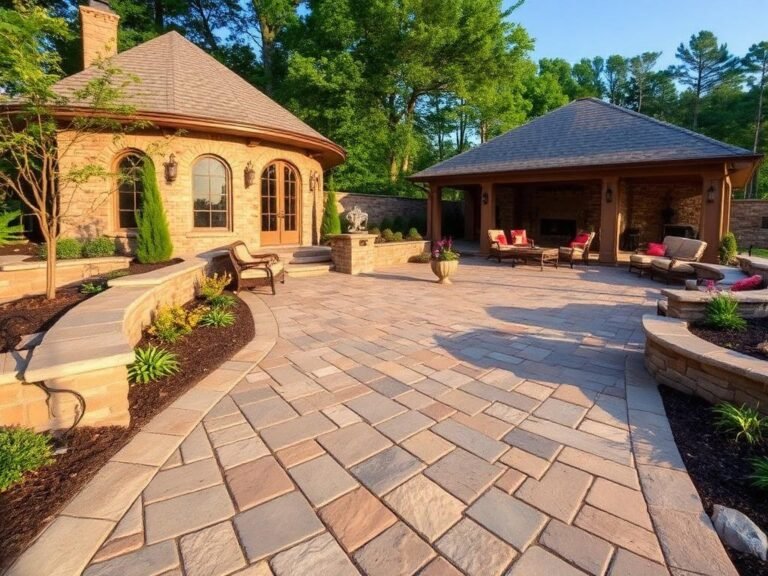
If you already have an existing paved area or patio in your garden, it’s a reasonable question to ask whether you really need to build a dedicated shed base, or whether you can simply place the shed straight onto the slabs that are already there. The honest answer is that it genuinely depends, not on the slabs’ appearance from above, but on what’s underneath them.
At JPD Landscaping & Building Services, we’ve assessed existing paved areas for shed suitability across South East London for over 15 years. This guide explains exactly what determines whether existing slabs are good enough on their own, what needs checking before you decide, and a real example of an assessment that changed a customer’s original plan.
Do You Need a Dedicated Shed Base on Existing Slabs?
Not always. Whether you need a dedicated base depends on your shed’s size and weight, along with the condition of your existing ground. The single most important thing to check is whether the sub base beneath the existing slabs is solid, rather than the slabs simply being laid loosely on soil. For small, light sheds, existing slabs that are solid and level are often perfectly adequate without needing a separate, dedicated base.
| Situation | Do You Need a New Base? |
| Small or light shed, solid sub base beneath existing slabs | Generally no, existing slabs are sufficient |
| Small or light shed, slabs laid directly on soil | Likely yes, sub base needs addressing first |
| Medium or large shed, any existing slab condition | Depends heavily on sub base, needs proper assessment |
Why the Sub-Base Matters More Than the Slabs Themselves
This is the key point that a lot of homeowners miss when assessing their own garden for shed suitability. Slabs that look perfectly fine on the surface, flat, clean, and free of obvious cracks, can still be sitting directly on soil rather than a proper compacted sub base underneath. Over time, and particularly under the concentrated weight of a shed, slabs without a solid sub base beneath them can shift, sink, or settle unevenly, even if they appeared completely stable before the shed went on top.
Checking beneath the surface, rather than judging purely by how the slabs look from above, is genuinely the most reliable way to determine whether your existing paved area is suitable for a shed without further work. This is the same underlying principle that applies to composite decking overlays, where the visible surface tells you very little about the condition of what’s actually supporting it.
When Existing Slabs Are Genuinely Fine for a Shed
For small, light sheds, existing solid, level slabs are often perfectly adequate without needing a dedicated base built specifically for the shed. If the sub base beneath the slabs is properly compacted and stable, and the slabs themselves show no signs of rocking, cracking, or uneven settling, a small shed can typically go straight onto that existing surface without issue.
This is genuinely good news for a lot of homeowners with an existing patio or paved area, since it can save both the time and cost of building a completely separate base from scratch. It’s worth comparing this potential saving against the cost of alternative base types, such as the plastic grid system covered in our guide on building a shed base without concrete, if it turns out your existing slabs aren’t quite suitable after all.
When You Should Build a Dedicated Base Instead
The picture changes for medium to larger sheds, or for any situation where the existing slabs’ sub base condition is uncertain or known to be inadequate. Larger, heavier sheds place more concentrated weight on the ground beneath them, and existing paving originally designed for general foot traffic use may not have been built with that additional load in mind.
If you’re unsure about your sub base condition, or you’re planning anything beyond a small, light shed, it’s worth getting a proper assessment before assuming your existing slabs will simply cope with the shed’s added weight. For larger structures specifically, our guide on foundations for larger, heavier sheds covers what a properly engineered base needs to support that scale of project, which existing patio paving is very unlikely to match without modification.
How to Check Your Existing Slabs Yourself Before Calling a Professional
While a full professional assessment is the most reliable route, particularly for anything beyond a small shed, there are a few basic checks a homeowner can reasonably do themselves as a first pass. Walking across the entire paved area methodically, paying attention to any give, rocking, or hollow sounding sections underfoot, can reveal individual slabs that aren’t sitting on solid ground beneath them.
Lifting a single slab from an inconspicuous corner or edge of the paved area, if it can be done without damaging anything, gives a direct look at what’s actually underneath, whether that’s a proper compacted hardcore sub base, a thin sand bed sitting directly on soil, or bare earth with no preparation at all.
This single lifted slab check, while not a complete substitute for a full assessment across the whole area, can often give a strong early indication of whether the rest of the paved area is likely to be genuinely suitable or whether further investigation is warranted.
What to Check Before Deciding
- Sub-base condition beneath the slabs. This is the most important check. Slabs laid directly on soil, without a proper compacted hardcore sub base underneath, are far more likely to shift or settle once a shed’s weight is added.
- Individual slab stability. Check for any rocking or movement in individual slabs, since this indicates a problem with either the sub base or the original installation that needs addressing before adding a shed.
- Overall levelness. Existing slabs should be reasonably level across the whole area, since any significant unevenness will carry through to how the shed sits once installed.
- Shed size and weight relative to the existing surface. A patio built for garden furniture and foot traffic may not have the same load bearing capacity a larger shed genuinely requires.
- Age and history of the existing paving. Older paved areas, particularly those installed by a previous owner with no record of how they were built, carry more uncertainty than a recently installed patio with known construction details.
- Drainage around the existing area. Check whether the existing slabs have ever shown signs of standing water or poor drainage, since this can indicate underlying ground or sub base issues that predate any shed being added.
Comparing Existing Slabs Against a Purpose-Built Base
It’s worth being realistic about what even a genuinely solid existing patio can and can’t offer compared with a base built specifically for a shed from the outset. A well constructed existing paved area with a proper sub base can absolutely perform just as well as a dedicated small shed base, since the fundamental requirements, a level, stable, well supported surface, are broadly the same regardless of the original purpose.
Where existing slabs sometimes fall short is in exact sizing and shape relative to the shed’s footprint, since a patio built for general garden use may extend well beyond or fall short of the shed’s actual dimensions in ways that affect how evenly weight is distributed, or leave the shed’s edges without adequate support if the paved area’s edge falls awkwardly beneath part of the structure.
This is worth checking specifically alongside the sub base condition itself, rather than assuming an adequately sized existing area automatically translates into ideal shed placement.
Common Mistakes When Deciding to Use Existing Slabs
Based on the assessments and repair callouts we’ve handled, a few mistakes come up consistently when homeowners decide to use existing paving without getting it properly checked first.
- Assuming existing slabs are fine without checking the sub-base underneath. This is the most common mistake we see, since the slabs’ surface appearance genuinely doesn’t tell you much about what’s supporting them beneath.
- Not checking for rocking or movement in individual slabs. Even a single loose or unstable slab within an otherwise solid area can indicate a broader sub base issue worth investigating further.
- Placing a large or heavy shed on slabs meant for lighter foot traffic use. Existing paving designed for general garden use isn’t necessarily built to handle the concentrated, sustained weight of a bigger shed.
- Ignoring how the shed’s footprint aligns with the existing paved area’s edges. Placing a shed so its edge sits just beyond the solid paved area, even partially, can leave part of the structure unsupported.
- Not considering the age or unknown history of older paving. Paving installed by a previous owner, with no record of how it was constructed, carries more genuine uncertainty than recently laid paving with known specifications.
In our experience, these issues often go unnoticed until the shed has already been placed and problems start to develop, which is exactly why checking beforehand matters so much.
What Happens If You Get This Wrong
It’s worth understanding what actually happens if a shed is placed on existing slabs that turn out not to have adequate sub base support, since this helps explain why the upfront check is worth the effort. Initially, the shed may sit perfectly fine, since the problem is often gradual rather than immediate. Over subsequent months, particularly through wet weather and seasonal ground movement, individual slabs beneath the shed’s weight can begin settling unevenly, which is considerably more disruptive to correct once a shed is already built and full of stored items on top of the affected area.
Correcting this after the fact typically means emptying and potentially disassembling the shed, addressing the sub base issue properly underneath, and then reassembling the structure, which is a significantly more involved and costly process than simply checking sub base condition properly before the shed ever went in place.
Case Study: Assessing Existing Slabs Before Placing a Shed
One of our typical assessments involved a customer in South East London who had an existing paved patio area and wanted to place a small garden shed directly onto it, assuming the slabs would simply be fine as they were.
What we found during assessment:
| Detail | Specification |
| Existing surface | Patio slabs, appeared solid and level from above |
| Shed planned | Small, light garden shed |
| Sub-base check | Solid, properly compacted hardcore beneath the slabs |
| Individual slab check | No rocking or movement detected |
What we advised: After checking beneath the surface and confirming the sub base was properly compacted and the individual slabs showed no signs of instability, we confirmed the existing patio was genuinely suitable for the small shed without needing a separate, dedicated base built specifically for it.
Result: The customer avoided the unnecessary cost and disruption of building a new base from scratch, since the assessment confirmed their existing slabs, along with the solid sub base beneath them, were entirely adequate for the small shed they had planned. This case is a good example of why a proper check, rather than an assumption either way, is the right first step before deciding.
If Your Existing Slabs Aren’t Suitable: What Are Your Options?
If an assessment reveals your existing paved area isn’t quite up to the job, it doesn’t necessarily mean starting from scratch across the whole space. In some cases, addressing sub base issues beneath just the specific area the shed will occupy, rather than the entire patio, can bring that section up to a suitable standard without disturbing the rest of the paved area.
Alternatively, building a dedicated, appropriately sized base directly alongside or within the existing paved area, using whichever base type suits your shed’s size, whether that’s a concrete slab, paving slabs specifically prepared for the purpose, or a plastic grid system, gives a reliable, purpose built foundation without needing to address the wider patio’s construction at all.
Frequently Asked Questions
Can I put a shed directly on existing paving slabs?
For small, light sheds, yes, provided the sub base beneath the slabs is solid and the individual slabs are level and stable. For larger sheds, or uncertain sub base conditions, a proper assessment is recommended.
What’s the most important thing to check before placing a shed on existing slabs?
Checking that the sub base beneath the slabs is properly compacted and solid, rather than the slabs simply being laid on loose soil, is the most important factor in determining suitability.
Do I need a new base if my existing slabs look fine?
Not necessarily, but appearance alone isn’t enough to confirm suitability. What’s beneath the surface, specifically the sub base condition, matters more than how the slabs look from above.
Is it safe to put a large shed on an existing patio?
This depends heavily on the sub base condition and the patio’s original construction. Larger, heavier sheds place more load on the ground than typical patio use accounts for, so a proper assessment is recommended before assuming it’s suitable.
How do I know if my existing slabs have a proper sub-base underneath?
This generally requires a physical inspection, since a solid, level surface can still be sitting on unprepared soil rather than compacted hardcore. A professional assessment is the most reliable way to confirm this.
What happens if I place a shed on slabs without a proper sub-base?
The shed may seem fine initially, but slabs can settle unevenly over subsequent months, particularly through wet weather, leading to a shed that needs emptying and repositioning once the underlying issue becomes apparent.
What are my options if my existing slabs aren’t suitable for a shed?
You can address sub base issues beneath just the shed’s specific footprint, or build a dedicated base, such as concrete, paving, or a plastic grid system, alongside or within the existing paved area rather than reworking the whole patio.
Get a Free Quote and Assessment for Your Shed Base
Whether you’re unsure if your existing slabs are suitable or need a new base built from scratch, JPD Landscaping & Building Services offers free quotes and assessments across South East London.