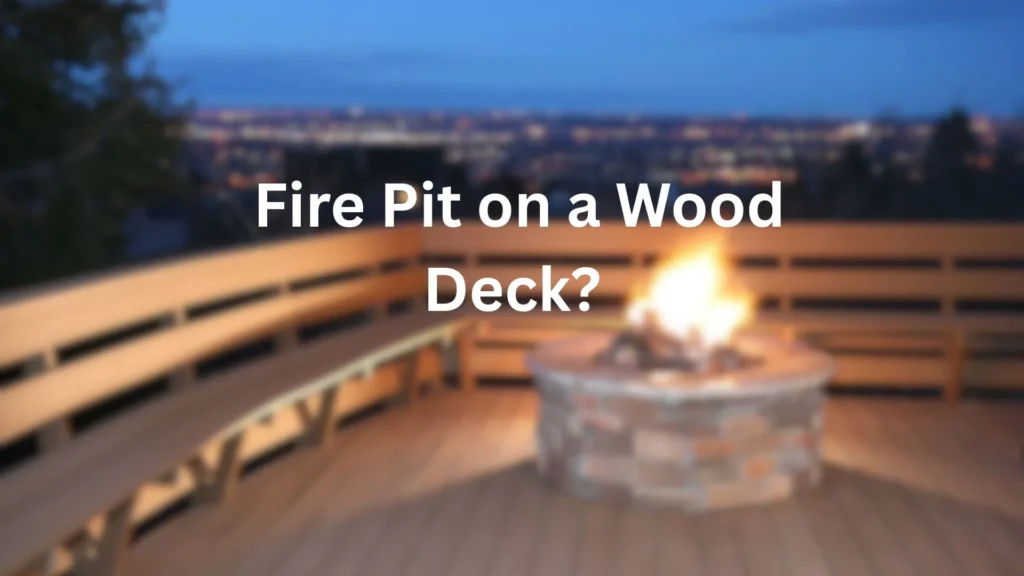
A fire pit can turn a garden deck into a genuinely great space for evenings outdoors, but it’s not something to set up without a bit of thought first. Wood decking and open flame or intense heat don’t naturally mix well, and getting the setup wrong can lead to scorching, damage, or worse. The good news is that with the right precautions, a fire pit on a wood deck can be done safely.
At JPD Landscaping & Building Services, we’ve installed and repaired decking across South East London for over 15 years, including deck damage caused by fire pits used without the right precautions. This guide covers exactly what’s safe, what isn’t, and a real repair case that shows what happens when the wrong setup goes unnoticed.
Can You Put a Fire Pit on a Wood Deck?
Yes, you can put a fire pit on a wood deck, but only with a proper heat resistant mat or pad placed underneath it. Placing a fire pit directly on wood boards, without that protective layer, is one of the most common mistakes we see, and it’s a leading cause of scorching and heat damage to decking.
| Fire Pit Setup | Safe for Wood Decks? |
| Fire pit with a heat resistant mat or pad underneath | Yes, with proper precautions |
| Fire pit placed directly on boards, no mat | No, high risk of scorching or damage |
| Gas fire pit with proper clearance and mat | Generally the safest option |
| Wood burning fire pit with proper clearance and mat | Possible, but requires extra care |
The Golden Rule: Always Use a Heat-Resistant Mat
If there’s one takeaway from this guide, it’s this: never place a fire pit directly on your wood decking without a proper heat resistant mat or pad underneath it. This single precaution is what separates a safely enjoyed fire pit from one that quietly scorches or damages your boards over time, often without you noticing until the damage is already done.
A good heat resistant mat sits between the fire pit’s base and your decking, absorbing and dispersing heat so it doesn’t transfer directly into the wood underneath. Without one, even a fire pit that seems perfectly controlled can gradually char, discolour, or weaken the boards beneath it, particularly with repeated use in the same spot.
Understanding How Heat Damages Decking
It’s worth understanding what’s actually happening underneath a fire pit to appreciate why this precaution matters so much. Wood begins to scorch and char at temperatures well below what most people assume, and a fire pit’s base can radiate significant heat downward even when the visible flame looks perfectly contained.
This heat transfer happens gradually rather than instantly, which is exactly why the damage often goes unnoticed for weeks or months, since a single evening’s use rarely causes visible harm on its own.
Repeated exposure to the same spot compounds the problem. Each use adds a small amount of additional heat stress to boards that haven’t fully recovered from the last session, gradually drying out and weakening the wood fibres directly beneath the fire pit’s base, long before any charring becomes visible from above.
Gas vs Wood-Burning Fire Pits: Which Is Safer?
Not all fire pits carry the same level of risk when used on a wood deck. In our experience, gas fire pits are the safer option for deck use, since they offer a controlled, consistent flame without the unpredictable sparks, embers, and higher heat spikes that come with a wood burning fire.
| Factor | Gas Fire Pit | Wood-Burning Fire Pit |
| Flame control | Consistent, adjustable | Less predictable, varies with fuel |
| Spark or ember risk | Very low | Higher, especially with green or wet wood |
| Heat intensity | More consistent, generally lower | Can spike significantly higher |
| Best for deck use | Yes, generally the safer choice | Possible with extra precautions |
Wood burning fire pits can still be used safely on a deck, but they require more diligence, particularly around ember control and heat mat placement, given their less predictable flame and higher potential heat output.
Does Deck Material Affect Fire Pit Safety?
Deck material does play a role, though it’s a secondary factor compared with using the right heat mat and fire pit setup. Hardwood decking is somewhat more fire resistant than softwood, owing to its denser grain structure, which burns and scorches slightly more slowly under direct heat exposure than the softer, less dense fibres in softwood.
That said, this difference in fire resistance is relatively minor when compared with the impact of using a proper heat mat. A hardwood deck without a heat mat is still at real risk of scorching, and a softwood deck with a good heat mat and sensible fire pit placement can be used just as safely as hardwood. If you’re planning a new deck with a fire pit specifically in mind, our guide on the best wood for UK decking covers material choice in more detail, though fire pit precautions remain essential regardless of which timber you choose.
What About Composite Decking and Fire Pits?
Composite decking introduces a slightly different consideration, since it’s made from a mix of wood fibres and recycled plastic rather than solid timber. While composite doesn’t char in quite the same way as natural wood, sustained heat exposure can still cause the plastic content within the board to soften, warp, or discolour, particularly around the direct contact area beneath a fire pit’s base.
A heat resistant mat is just as essential for composite decking as it is for softwood or hardwood, if not more so, since some composite boards can be more sensitive to direct, sustained heat than dense hardwood species like Balau. Always check the specific manufacturer’s guidance for your composite product before using a fire pit anywhere near it, since heat tolerance can vary noticeably between different composite brands and formulations.
Setting Up a Fire Pit Safely on Your Deck
- Always use a heat resistant mat or pad underneath the fire pit. This is the single most important precaution and should never be skipped, regardless of fire pit type or deck material.
- Check the manufacturer’s clearance guidelines. Most fire pits come with recommended clearance distances from walls, fences, and overhead structures. Always follow these exactly rather than estimating.
- Choose a gas fire pit where possible. The more controlled flame and lower spark risk make gas fire pits the generally safer option for deck use.
- Position away from railings, walls, and overhanging structures. Even with a heat mat, keeping distance from anything flammable nearby adds an important extra layer of safety.
- Never leave a fire pit unattended. This applies to any fire pit use, but it’s especially important on a wood deck where the risk of damage or fire spread is higher than on open ground.
- Keep a fire extinguisher or water source nearby. Having something on hand to quickly deal with any sparks or flare ups is a simple, sensible precaution.
- Move the fire pit periodically if possible. Rotating its position slightly between uses, where practical, avoids concentrating repeated heat exposure on exactly the same spot of decking over time.
Choosing the Right Heat-Resistant Mat
Not all heat mats offer the same level of protection, so it’s worth understanding what to look for before buying one. Mats designed specifically for fire pit use are typically rated for a maximum sustained temperature, and it’s important to check this rating against your specific fire pit type, since wood burning pits can generate higher peak temperatures than gas alternatives.
Size matters too. A mat that only covers the immediate footprint of the fire pit’s base may not account for radiant heat spreading slightly beyond that area, so choosing a mat with a reasonable margin around the fire pit’s edges offers a more reliable level of protection than one cut to the exact base dimensions.
Mats with a heat reflective underside, designed to direct warmth back upward rather than through to the deck, generally offer better protection than a simple flat pad with no reflective properties.
Fire Pit Clearance and Positioning on a Deck
Beyond the mat itself, where you position a fire pit on your deck plays a significant role in overall safety. Most manufacturers specify a minimum clearance distance from walls, fences, railings, and any overhead structure such as a pergola or roof overhang, and these figures should always be treated as a strict minimum rather than a rough guide.
It’s also worth thinking about wind direction and typical airflow patterns in your specific garden, particularly for wood burning fire pits, since sparks and embers can travel further than expected on a breezy evening. Positioning the fire pit away from the prevailing wind direction relative to any nearby structures, planting, or furniture adds a further layer of protection beyond the manufacturer’s stated clearance distance alone.
Common Fire Pit Safety Mistakes on Wood Decks
Based on the repair jobs we’ve handled, one mistake stands out well above the others.
- Placing the fire pit directly on the boards without a heat mat. This is, by far, the most common mistake we see. It might seem fine for the first few uses, but repeated heat exposure to the same spot gradually scorches and weakens the wood underneath, often without any obvious warning signs until the damage is significant.
- Using a wood burning pit too close to walls or fences. Sparks and embers from a wood burning fire can travel further than expected, particularly on breezy evenings, making proper clearance distance essential.
- Ignoring manufacturer clearance guidelines. Every fire pit has specific recommended clearances for a reason, and skipping this step increases risk even when other precautions are followed correctly.
- Never rotating or repositioning the fire pit. Even with a heat mat, always placing the fire pit in exactly the same spot concentrates whatever residual heat does get through onto one small area over a long period.
- Assuming a heat mat removes the need for other precautions. A heat mat protects the boards directly underneath the fire pit, but it doesn’t reduce the risk of sparks, embers, or radiant heat affecting nearby structures or furniture.
Case Study: Repairing a Scorched Deck From Improper Fire Pit Use
We were called out to a garden in South East London where a customer’s softwood deck had developed a noticeable dark, scorched patch in one corner, roughly the size and shape of their fire pit’s base.
What we found:
| Detail | Specification |
| Deck material | Softwood |
| Fire pit type | Wood burning fire pit |
| Setup issue | No heat resistant mat used underneath |
| Damage | Charring and discolouration in a concentrated area |
What we found on inspection: The customer had been using their fire pit directly on the boards for several months, without realising the gradual heat exposure was slowly damaging the wood underneath. By the time the scorching became visibly obvious, several boards in that section had weakened significantly and needed replacing.
What we did: We replaced the affected boards, matched them as closely as possible to the surrounding deck, and advised the customer to invest in a proper heat resistant mat before using their fire pit again, along with repositioning it slightly further from the boundary fence to meet standard clearance guidance.
Result: The repaired section blended in well with the rest of the deck, and the customer has continued using their fire pit safely since, now with a heat mat underneath and proper clearance from surrounding structures. This case is a clear reminder that fire pit damage often isn’t immediately obvious, it builds up gradually until it’s suddenly very visible.
Signs Your Deck May Already Have Fire Pit Damage
- Dark, discoloured patches concentrated in one area of the deck
- Boards that feel noticeably softer or more brittle in the affected spot
- A slightly charred or burnt smell coming from the area, even without visible flames nearby
- Boards that have started to warp or curl specifically where the fire pit has been placed
If you notice any of these signs, it’s worth having the affected boards inspected and, if necessary, replaced before the damage spreads further into the surrounding structure.
Designing a New Deck With Fire Pit Use in Mind
If you’re planning a new deck and already know you’ll be using a fire pit regularly, it’s worth factoring this into the design from the outset rather than treating it as an afterthought. Some homeowners choose to incorporate a dedicated non combustible section, such as a paved or gravel inset within the decking area specifically for the fire pit to sit on, removing the reliance on a mat entirely and giving extra peace of mind for regular use.
If a fully decked surface is preferred instead, positioning the fire pit area away from railings, boundary fences, and any overhanging features at the planning stage, rather than working around fixed clearance restrictions later, generally gives a safer and more comfortable finished layout overall.
Frequently Asked Questions
Can you put a fire pit directly on a wood deck?
Not without a proper heat resistant mat or pad underneath. Placing a fire pit directly on wood boards without this protection is a common cause of scorching and long term damage.
Are gas fire pits safer than wood-burning fire pits on decks?
Generally yes. Gas fire pits offer a more controlled, consistent flame with a much lower risk of sparks and embers compared with wood burning fire pits.
Does hardwood decking resist fire pit damage better than softwood?
Hardwood is somewhat more fire resistant than softwood due to its denser grain, but this difference is minor compared with the protection a proper heat mat provides.
What’s the biggest mistake people make with fire pits on decks?
Placing the fire pit directly on the boards without a heat resistant mat underneath is the most common and most damaging mistake we see.
How do I know if my deck has fire pit damage?
Look for dark, discoloured patches, softer or more brittle boards, a charred smell, or warping concentrated in the area where the fire pit has been used.
Is composite decking safe to use with a fire pit?
Composite decking still needs a heat resistant mat, and in some cases can be more sensitive to sustained heat than dense hardwood, so it’s worth checking manufacturer guidance for your specific composite product before use.
Should I move my fire pit around on the deck rather than keep it in one spot?
Where practical, yes. Even with a heat mat, repositioning the fire pit occasionally helps avoid concentrating repeated heat exposure on exactly the same section of decking over time.
Get a Free Quote for Deck Repairs or a New Fire Pit-Ready Deck
If your deck has fire pit damage that needs repairing, or you’re planning a new deck built with fire pit safety in mind from the start, JPD Landscaping & Building Services offers free quotes across South East London.Get a Free Quote